Portfolio Archive: Cytale
Freelance Technical Writer — Early Innovation and User Documentation
Key Elements
| Category | Data |
|---|---|
| Client | Cytale |
| Project type | Pioneering software and hardware product |
| Deliverables | Embedded HTML Help and printed user guide |
| Approach | Hands-on testing and user-centered documentation |
| Expertise | Information architecture, HTML/CSS, contextual Help, user onboarding |
Project Overview
Among the 30+ clients I have worked with before 2019, Cytale remains one of the most memorable.
In 2000, the company launched a pioneering French eBook reader, years before digital reading became mainstream. This project illustrates a long-standing aspect of my work: documenting innovative products before their usage patterns, interfaces, and conventions were fully established.
It also shows that, from the earliest stages of my career, my approach already combined hands-on product exploration, user advocacy, information architecture, and clear, task-oriented documentation.

The Cybook by Cytale
Cytale developed one of the first French devices designed for reading digital books and newspapers, with features that also enabled users to annotate content.
The Cybook was particularly innovative for its time because it combined hardware, software, digital content, and a touch-screen interface into a single user experience.
Many interactions that later became familiar on tablets and e-readers – such as using a stylus and navigating digital publications – were still new to most users.
I tested the Cybook extensively and explored its features as an early product user. This hands-on approach enabled me to identify likely questions, usability issues, and onboarding needs before writing the documentation.
My Role
My role covered both digital and printed documentation:
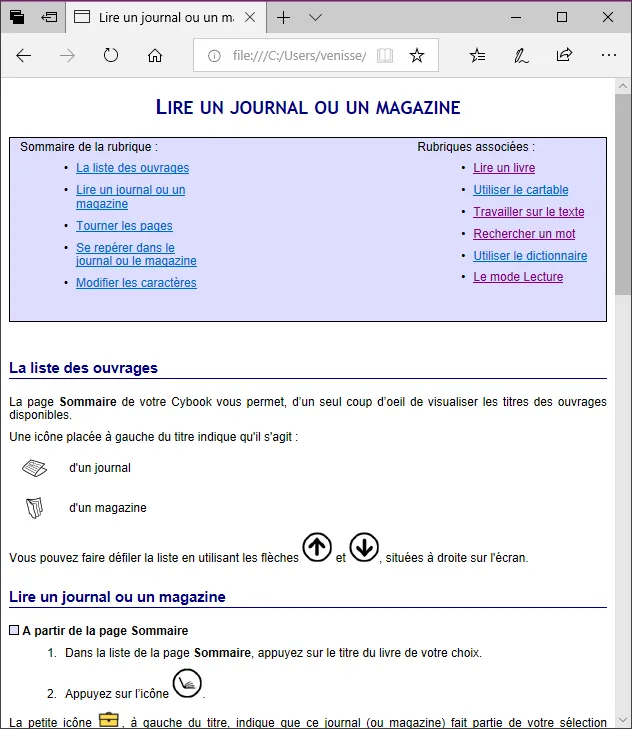
- Designing the information architecture and authoring the Cybook's embedded HTML Help system.
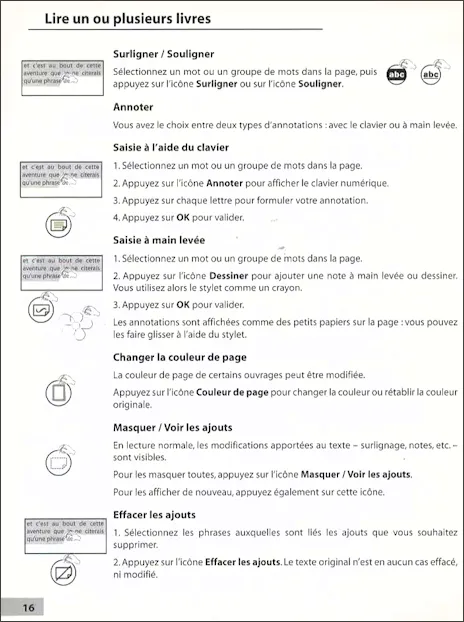
- Writing a printed user guide for readers who might have limited experience with digital devices.
- Testing product features and workflows to document actual usage rather than relying solely on specifications.
- Designing contextual guidance, examples, tips, indexing, and navigation adapted to the device.
- Collaborating with a graphic designer to integrate custom icons aligned with the product's visual identity.
A User-centered Documentation Approach
The online Help was designed as an integral part of the product experience rather than as a separate reference manual.
It included:
- contextual Help
- step-by-step guidance
- practical examples
- tips
- an index
- general product information
- navigation adapted to the eBook format and screen constraints
The structure and layout were specifically designed for the Cybook's interface and for users discovering a new way of reading and interacting with digital content.
Why This Project Still Matters
The tools and formats have evolved, but the core challenges remain highly relevant:
- understanding a new and unfamiliar product
- identifying user needs before conventions exist
- translating complex behavior into clear guidance
- designing documentation around real usage
- adapting content to the technical constraints of its delivery platform
This project is an early example of the approach I still apply today to SaaS platforms, developer portals, docs-as-code websites, and AI-ready documentation: explore the product, structure the knowledge, anticipate user needs, and turn complexity into a usable experience.
The HTML Help
The User Guide
©Author: Florence Venisse, Technical Documentation & AI Expert – Reviewed version of 07/21/2026.